


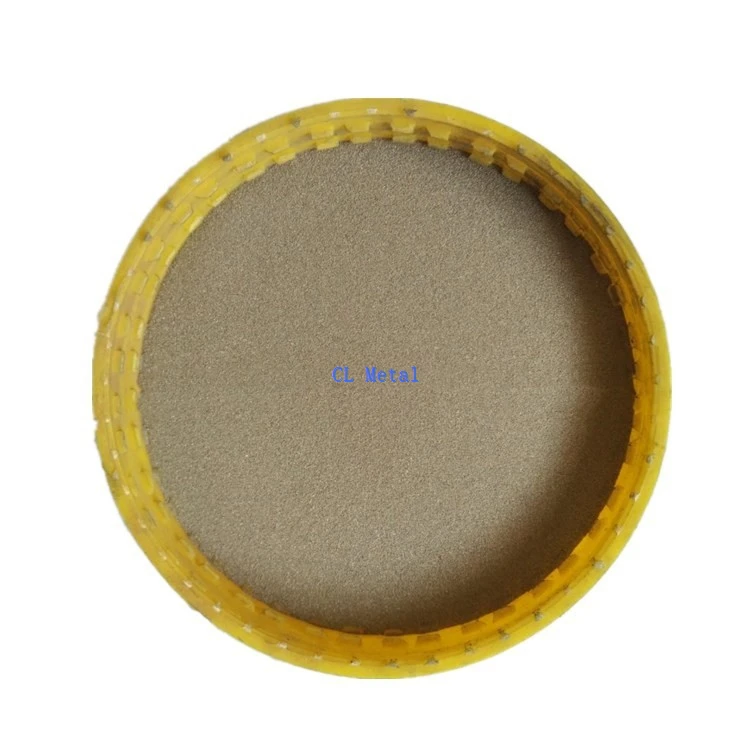

Grade 1 Titanium Powder is commercially pure titanium feedstock for additive manufacturing development, powder consolidation, coating work, and other controlled trials that require the Grade 1 material family in particulate form. Its relatively simple alloy identity does not make powder selection simple. Particle distribution, shape, surface exposure, production history, and container condition all influence how material moves through a feeder or spreads across a build area. The practical reason to buy this product is to pair approved Grade 1 chemistry with a powder lot that can be introduced into a defined process without losing its identity.
A useful order begins with the machine and qualification route, then works back to the incoming powder characteristics that can actually be measured. Grade 1 Titanium Powder may be supplied for a first material trial, a comparison build, or repeat work following an accepted lot. In each case, chemistry and powder characterization support the decision, while finished-part density, strength, surface, and fatigue response emerge only after the equipment, atmosphere, parameters, geometry, and post-processing operate together. Keeping those stages distinct lets technical teams compare powder lots without asking an incoming certificate to stand in for a completed process qualification.

Start With the Grade, Then Describe the Powder
The words commercially pure titanium describe a family, not a complete purchase condition. The enquiry should name Grade 1 and provide the material document or chemistry basis accepted for this program. Elements important to that basis can then be reported by the agreed analytical method. A broad purity percentage is less useful because it may hide which residual or interstitial elements were considered and whether the result represents precursor material or the finished powder lot.
The Machine Sees a Distribution, Not a Nominal Range
Particle size is normally discussed as a distribution because fines, the central fraction, and oversize particles each affect the character of the lot. The requested results should be paired with the measurement method so results from separate laboratories can be interpreted on the same basis. When a cut fraction is needed, the order can describe how the fraction is defined and whether agglomerates or oversize material receive additional control.
Feeding performance still cannot be read from size data alone. Recoater design, hopper geometry, vibration, layer strategy, humidity control, and electrostatic behavior influence what operators observe. A powder that feeds consistently in one installation may require different handling in another. For a new program, a representative trial quantity provides more useful evidence than an unsupported claim that one particle profile is ideal for every machine.
| Purchase decision | Information to state | Receiving use |
|---|---|---|
| Material identity | Grade 1 basis, controlled chemistry, reporting method | Confirms the ordered titanium family |
| Particle profile | Distribution requirement and measurement method | Supports lot comparison and machine trials |
| Powder condition | Virgin status, production lot, handling declaration | Separates histories before qualification |
| Container plan | Quantity per container, seals, labels, sample mapping | Maintains identity after shipment is divided |
Morphology Evidence Needs Context
Spherical powder is selected to support consistent movement and packing, but the adjective should lead to evidence rather than replace it. Representative imaging can show rounded particles, satellites, irregular shapes, or agglomeration. The sampling approach and magnification context matter because one carefully chosen field cannot characterize all material in a production lot. Buyers can define the features that matter to their development program without inventing universal limits.
Control the First Opening and Every Transfer
Sealed containers protect more than the powder surface; they preserve the meaning of the lot record until use. Container size should match consumption and handling plans so operators do not repeatedly expose a large package for small trial quantities. Labels can carry product name, lot reference, package identifier, and contained mass. Where inerting or a special opening procedure is required, it should follow the approved plant safety and process plan rather than generic catalog language.
Metal powder operations require facility-specific controls for ignition sources, combustible dust, ventilation, protective equipment, spill response, and disposal. Those controls continue through sieving, transfer, machine cleaning, and waste collection. Once material has entered the user's equipment or reuse stream, the site should track exposure, blending, screening, and cycle history. Incoming Grade 1 material and recovered material should remain clearly separated unless a validated procedure authorizes their combination.

Plan a Trial That Answers One Useful Question
Early evaluation is most informative when the purpose is narrow. A trial may examine feed consistency, spreading observations, response to a selected build setup, or compatibility with a planned downstream route. Changing material lot, layer approach, atmosphere practice, heat treatment, and part geometry at the same time makes the result difficult to interpret. Recording the powder container and build context allows later work to distinguish a material change from an equipment or processing change.
The related Titanium Spherical Powder category helps compare particulate titanium forms. Where the design calls for an alloyed feedstock instead of commercially pure titanium, Grade 5 Titanium Powder is a separate material option. Neither link establishes interchangeability: the design authority still selects chemistry, and the process team qualifies that material in its equipment.
Release the Lot Before Releasing the Part
| Decision gate | Evidence available | What remains to be proven |
|---|---|---|
| Shipment receipt | Package, seal, label, quantity | Powder behavior after opening |
| Incoming lot | Chemistry and agreed characterization | Performance in the selected equipment |
| Process trial | Recorded feeding and build observations | Repeatability across production conditions |
| Finished component | Part-specific inspection and testing | Future lots or changed reuse practice |
Questions About Ordering Grade 1 Titanium Powder
Is Grade 1 powder interchangeable with Grade 5 powder?
They are not interchangeable: Grade 1 is commercially pure titanium, while Grade 5 is a titanium alloy with a different material definition. They need separate storage identity, process records, and qualification decisions even when particle appearance is similar.
How should particle size be written on an enquiry?
State the required distribution or cut fraction and identify the measurement method. Add the machine family and trial purpose so the offered profile can be reviewed in the right feeding context.
Does spherical appearance prove that powder will spread well?
No single image can prove machine behavior. Representative morphology, distribution, comparative flow data, and a controlled equipment trial together provide a more useful evaluation.
What does virgin status cover?
It distinguishes newly produced feedstock from reclaimed or previously circulated material. The declaration should apply to the offered lot and connect to each sealed container.
Can the powder certificate release printed production parts?
The certificate supports incoming material acceptance. Printed parts still depend on the qualified machine route, atmosphere, build settings, geometry, thermal history, finishing, and component inspection.
Frame the Purchase Around the Trial Goal
For quotation, provide Grade 1 Titanium Powder as the product identity, the accepted chemistry basis, requested particle distribution and method, morphology evidence, virgin status, total quantity, container allocation, and required documentation. Describe the process family, equipment context, and question the first trial is intended to answer. Add sampling, retained-sample, seal, label, and package requirements that your receiving procedure can actually verify.
Also state whether any powder test is an acceptance requirement or information for development review. This distinction prevents exploratory data from becoming an accidental rejection rule. A compact enquiry with a defined lot boundary and a realistic trial purpose gives both purchasing and engineering a sound basis for comparing offers, receiving containers, and deciding when a new material lot is ready to enter the next qualification stage.
Hot Tags: Grade 1 Titanium Powder, China Grade 1 Titanium Powder manufacturers, suppliers, factory, atomized steel, activated zinc dust, powdered manganese dioxide, tantalum metal powder, aluminium oxide powder price, electrolytic iron powder price


