


Workshop Update: Pure Nickel Strip Orders Are Getting More Practical
In the past few weeks, our sales and production teams have noticed a steady change in the way customers discuss pure nickel strip for battery tabs. The first question used to be simple: what is the price per kilogram? That question still matters, of course, but more buyers now send drawings, cell layouts, welding notes and packaging requests before asking for a quotation. It is a useful shift because nickel strip is rarely just a flat piece of metal in a battery project. It becomes part of the connection path, the welding process and the final reliability of the pack.
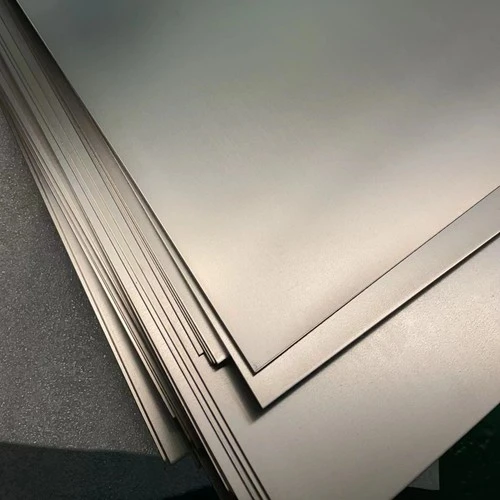 Pure nickel strip prepared for battery tab and electrical connection discussions.
What Customers Are Checking Before Placing Orders
One common point is the difference between material grade and actual use. Nickel 200 is often requested for battery tabs because of its good conductivity and welding performance. Nickel 201 is discussed when customers want a lower carbon grade or have special service conditions. In daily purchasing work, the grade name alone is not enough. The team still needs to confirm thickness, strip width, temper, surface condition, coil weight and whether the strip will be used directly for welding or stamped into a special shape.
Several customers have also asked for narrower slit widths and cleaner edge control. This is not a small detail. A visible burr may look minor on a single strip, but it can create handling problems during pack assembly or interfere with consistent welding pressure. For this reason, more orders now include notes about slit edge quality, flatness and whether the strip should be supplied in coil, straight strip or cut pieces.
Welding Stability Matters More Than a Nice Surface Photo
Surface brightness is easy to see in a photo, but welding stability is what customers finally care about. Oil residue, oxidation and inconsistent hardness can all affect the welding spot. When a buyer tells us the cell type, current requirement and welding method, it becomes easier to suggest a practical thickness and temper instead of simply quoting the nearest stock size. For battery pack assemblers, the best nickel strip is usually the one that runs smoothly through their process, not the one that only looks bright on a catalogue page.
We also see more customers comparing pure nickel strip with nickel-plated steel strip. Pure nickel is not always the cheapest option, but it offers better corrosion resistance and more stable electrical behavior in demanding applications. For high-reliability battery packs, energy storage modules and long-service electrical connections, many buyers prefer to evaluate the total risk rather than only the material cost.
Documentation and Packaging Are Now Part of the Conversation
Export customers are paying closer attention to paperwork. Commercial invoice, packing list, material certificate and chemical composition report are often requested before shipment planning. Good documents help customs clearance, internal approval and customer audits. Packaging has also become more specific. Some buyers need small coils for manual assembly, while others prefer larger coils for continuous production. Clear labeling and moisture protection can reduce confusion when the material reaches the workshop.
A More Useful Way to Request a Quote
For new nickel strip inquiries, the most efficient request includes grade, thickness, width, temper, form, quantity and application. A drawing or photo of the existing strip is also helpful. If the strip is for battery tabs, customers can add cell type, welding process and current requirement. If it is for a connector or stamped part, tolerance and hardness notes are more important. With this information, our team can review the requirement more carefully and give a quotation that is closer to the real production need.
This practical communication saves time for both sides. It reduces repeated emails, avoids wrong material assumptions and makes delivery planning more realistic. For buyers working on battery packs, electrical connectors or custom conductive parts, pure nickel strip remains a small item on paper, but it is an important detail in the finished product.
Related product page: Nickel Strip for Battery Tabs.