

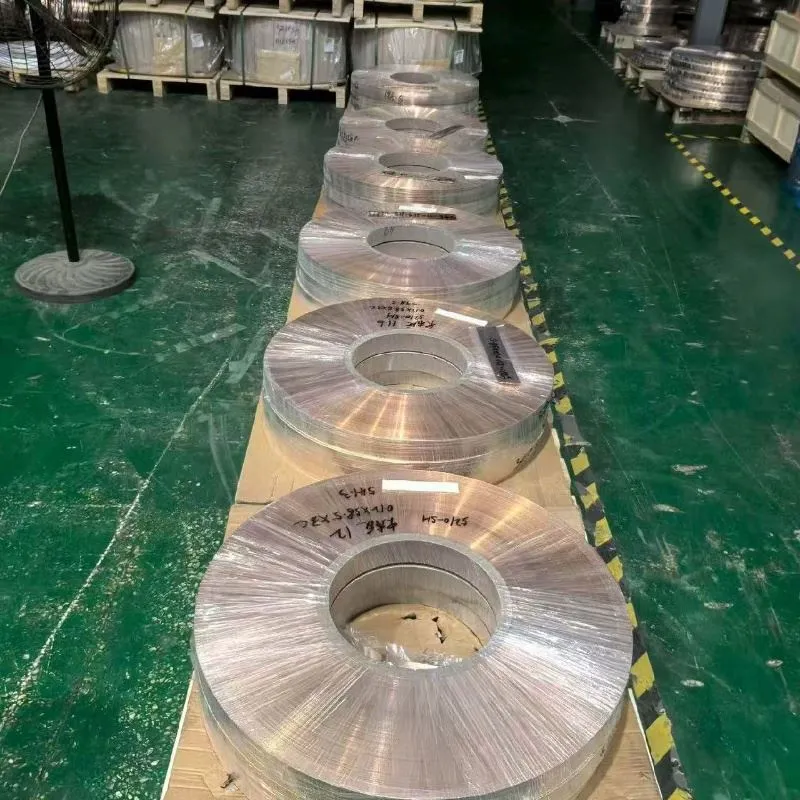
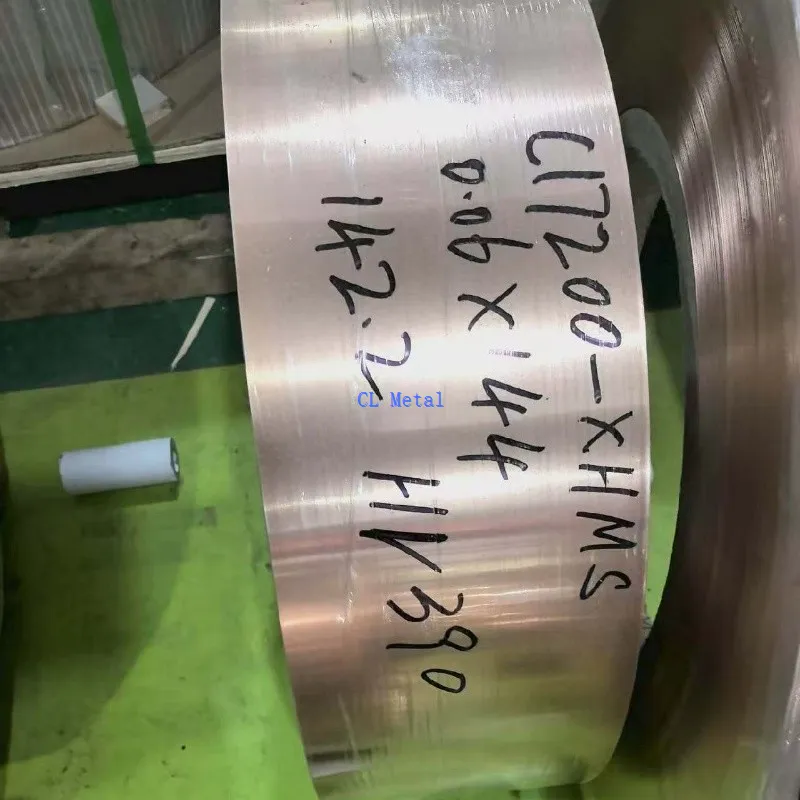
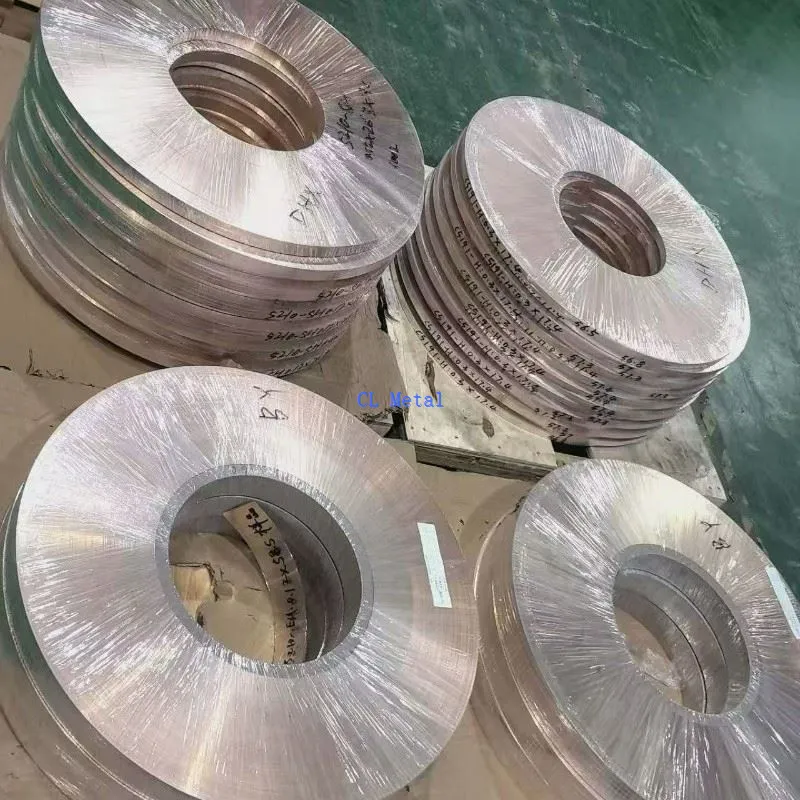

Many customers focus solely on "grade" and "price" when purchasing, but what truly determines product stability is whether the material's performance matches the actual application scenario.
This is also the most easily overlooked issue in the industry today.
FAQ
Q: What is Phosphor Bronze Foil?
A: Phosphor bronze is essentially a copper-tin alloy. Adding appropriate amounts of tin (Sn) and phosphorus (P) to copper can significantly improve:
* Strength
* Elasticity
* Wear Resistance
* Fatigue Resistance
* Corrosion Resistance
Currently, mainstream models on the market include:
* C5100 (5% tin)
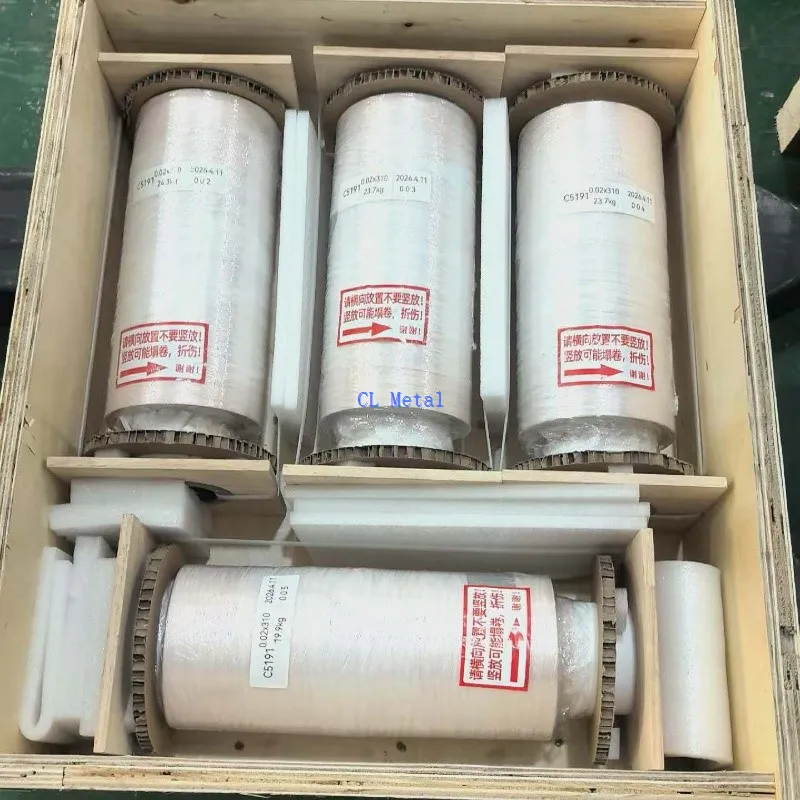
* C5191 (6% tin)
* C5210 (8% tin)
Higher tin content:
* Higher strength
* Better elasticity
* Greater difficulty in forming
Therefore, there is no "best material," only "the material most suitable for the working conditions."
II. The Core Considerations During Procurement
1. The balance between elasticity and conductivity-this is the most crucial core issue.
Many customers desire:
* High strength
* Stable resilience
* Good conductivity
However, the reality is:
Higher material strength usually results in lower conductivity.
Therefore, a balance must be struck based on the actual application:
1: Connector terminals should be selected for high elasticity and high fatigue resistance.
2: EMI shielding should prioritize stable conductivity.
3: Precision springs should be selected for resistance to stress relaxation.
4: New energy battery connections should prioritize conductivity and heat resistance.
5: Miniature relays should prioritize high dimensional stability.
Discussing materials without considering the application can easily lead to:
* Insufficient elasticity
* Poor contact
* Overheating
* Fatigue fracture
* Stamping cracking
III. Material Selection Logic for Different Applications
1. High-Frequency Connector Industry
Currently, the requirements for materials in high-speed communication equipment are becoming increasingly stringent.
Key Focus Areas:
* Signal Stability
* Insertion/Removal Life
* High-Frequency Loss
* Miniaturization Stamping Performance
General Recommendations:
* C5191 H/HV Condition
* Ultra-thin, high-precision rolled foil
* Strict Control of Surface Roughness
Surface consistency directly affects subsequent plating and signal transmission.
2. New Energy Battery Sector
The demand for phosphor bronze in the new energy vehicle and energy storage industries is growing significantly.
Key Focus Areas:
* Long-Term Conductivity Stability
* Heat Resistance
* Vibration Fatigue Resistance
* Welding Reliability
Many low-end materials initially perform well, but after long-term thermal cycling:
* Severe Stress Relaxation
* Decreased Contact Pressure
Causing Overheating Risk
Therefore, new energy customers typically focus more on:
* Fatigue Life Data
* Stress Relaxation Curve
* Batch Stability
Not just Material Price.
3. Precision Stamping Industry
Common Customer Issues:
* Severe burrs
* Cracking
* Instable dimensions
* Reduced die life
Essentially, many times the problem isn't with the die itself, but rather with:
* Unstable grain control
* Hardness fluctuations
* Poor sheet shape
* Excessive internal stress
A truly mature supply chain will focus on controlling:
* Thickness tolerance
* Consistency of transverse and longitudinal properties
* Surface tension
* Rolled microstructure
Because precision stamping is most vulnerable to batch-to-batch material fluctuations.
IV. Industry Trends Are Changing
In the past, the market competed on:
* Low price
* General-purpose materials
* Standard specifications
Now, the focus is increasingly on:
* High precision
* Ultra-thin design
* Customization
* Stability
* Long lifespan
Especially in AI servers, new energy vehicles, robotics, and high-speed communications, the demand is no longer just for "usable," but for:
* Lower failure rate
* Longer fatigue life
* Higher consistency
* More stable batch management
In the future, truly competitive companies will not just sell materials, but will excel in early-stage selection and application development.
V. We Develop Procurement Solutions Based on Customer Needs:
Truly professional solutions don't involve direct quotes; we first analyze the customer's application.
This typically requires clarifying:
1. Product application
For example:
* Connector?
* Spring?
* Shielding cover?
* Battery structural components?
* High-frequency signal terminals?
Different applications dictate completely different material choices.
2. Core Performance Priorities: What Do Customers Value Most?
* Conductivity
* Elasticity
* Strength
* Weldability
* Stamping Performance
* Fatigue Resistance
Many properties are inherently interdependent.
A balance must be found.
3. Processing Technology Matching
The following need to be confirmed in advance:
* Stamping Depth
* Bending Angle
* Electroplating Process
* Reflow Soldering Temperature
* Operating Environment
Otherwise, even with the right material, processing may still fail.
VI. Material Competition Has Entered the "Application Solution Era"
The future of the phosphor bronze foil industry will no longer be simply about:
"Whoever offers the lowest price."
What customers truly need is not just a roll of copper, but a stable, reliable, and long-term controllable material solution.
If you are evaluating the selection and procurement of phosphor bronze foil, we recommend focusing on the following:
* Practical application matching
* Batch stability
* Processing consistency
* Fatigue life
* Long-term reliability data
Only material solutions based on application scenarios can truly help reduce product risks and enhance long-term competitiveness.
If you would like to learn more about the application solutions of different grades of phosphor bronze foil in connectors, new energy, precision stamping, and other fields, please feel free to contact us. We can assist in developing a more suitable material and supply solution based on your actual working conditions and processing requirement
Hot Tags: phosphor bronze foil c5191, China phosphor bronze foil c5191 manufacturers, suppliers, factory


