



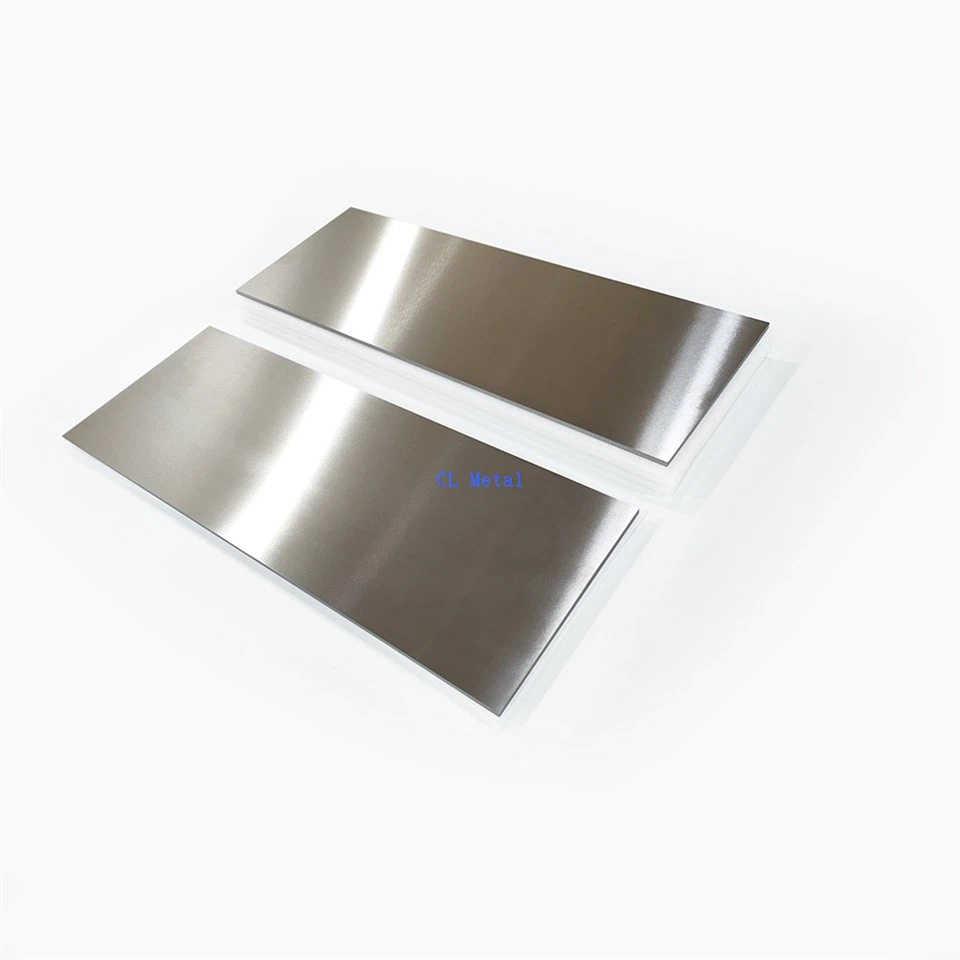
Tungsten Heavy Alloy is a dense tungsten-base material used when a component must place substantial mass inside a restricted envelope. Typical parts include radiation-shielding blocks, counterweights, balance masses, inertial bodies, vibration-control pieces and machined tooling components. Unlike pure tungsten, this family uses a metallic binder system that supports practical consolidation and machining. The selected grade determines more than density; composition can also influence magnetic response, joining route and mechanical behavior.
The finished mass distribution is the central purchasing logic. Outside dimensions, bores, pockets and hidden features all remove material and can shift the center of gravity. A dimensional drawing without a target mass may produce a geometrically correct part that does not balance the assembly. Tungsten Heavy Alloy can be supplied as block or round stock, a cut blank, a near-size form or a completed component. Releasing composition, mass basis and finished geometry together allows the starting form and machining scope to follow the real function.

Density Is a Design Tool, Not the Whole Grade
A compact mass begins with the amount of material that can occupy the available space. Density connects volume to target mass, but the approved alloy definition must also be stated. Tungsten-heavy materials can use different constituent balances and binder systems. Those differences may matter to machinability, magnetic restrictions, coating or joining. An enquiry that says only "high-density tungsten" leaves technically different options open.
Mass and dimensions should have separate acceptance limits. A finished part can meet length, diameter and bore requirements yet differ in total mass because of material density or an unreported internal feature. Conversely, grinding a part to a target weight can move a functional surface outside its tolerance. The drawing should identify where material may be adjusted, if any adjustment is allowed, and which geometry cannot be changed.
| Design objective | Information to release | Reason it affects the material order |
|---|---|---|
| Compact ballast | Available envelope and finished target mass | Connects alloy density with usable volume |
| Rotating balance | Axis, center-of-gravity basis and speed context | Highlights mass distribution and concentricity |
| Radiation shielding | Qualified shield geometry and penetrations | Defines the physical part being supplied |
| Joined assembly | Mating material and attachment route | Guides binder and interface review |
Shielding Depends on the Complete Barrier
High density makes tungsten heavy alloy attractive for compact shielding components. The shield design still depends on radiation type, energy, source arrangement, distance, gaps, joints and openings. These factors establish the required shape and belong to the qualified shielding calculation. Material supply can then follow the released geometry and composition, with particular attention to seams, cable passages or mounting holes that interrupt the barrier.
Modular shields may use several interlocking blocks rather than one massive piece. In that case, interfaces and assembly order deserve drawing control. Step joints, overlaps or locating features can be machined where the design uses them, but their effectiveness comes from the installed arrangement. Piece marks are useful when similar-looking segments occupy different positions around a source.
Counterweights Need the Balance Point on the Drawing
For a static counterweight, the main task may be fitting a high mass behind a cover or within a moving arm. Dynamic equipment adds center of gravity, axis relationship, rotational inertia and attachment security. A ring, eccentric block or pocketed cylinder distributes mass differently even when total weight is identical. Datums should therefore relate critical bores and outside surfaces to the assembly axis.
Fastener holes, keyways and clamps should be designed with realistic edge distances and transitions. Adhesive, brazed or mechanical attachment each places different demands on surface preparation and local stress. If the weight will be coated or painted, identify protected fits and any area used for electrical grounding. The component drawing should make these interfaces visible before machining begins.

Near-Size Stock Can Protect Expensive Material Yield
High-density stock is costly to remove and produces heavy remnants. A standard block gives flexibility for prototypes, while cut or near-size blanks can reduce sawing and rough machining for repeat parts. Finished supply may be efficient when mass, dimensions and inspection must be coordinated. The quantity, feature stability and value of removed stock determine whether near-net tooling is justified.
Machining behavior follows the selected composition and condition rather than assumptions about steel or pure tungsten. Slender bores, fragile walls, discontinuous tool engagement and fine threads can determine the practical route. A staged operation may be useful where extensive removal could release stress or leave a delicate section unsupported. Surface finish belongs on bearing, sealing, bonding or locating faces; polishing every visible area can add cost without improving balance.
Ring geometry can be explored through Tungsten Alloy Ring when the bore and annular mass are already central to the design. Where current flow and thermal conduction matter more than compact ballast, Tungsten Copper Alloy represents a distinct composite system. Shared tungsten content does not make the two product families interchangeable.
Measure the Part That Controls Assembly Behavior
Stock acceptance can include the released material identity, dimensions, surface condition, quantity and agreed density evidence. Completed counterweights add finished mass and drawing features. If center of gravity is a contractual characteristic, the coordinate system, orientation, fixture and method need to be defined. "Perfect balance" has no reproducible meaning without those details.
| Acceptance item | Useful record | Assembly question it supports |
|---|---|---|
| Alloy identity | Grade or composition linked to lot | Was the approved heavy material supplied? |
| Finished mass | Piece result from the stated weighing basis | Will the weight meet its balance role? |
| Functional geometry | Datum-based dimensional report | Will the component locate correctly? |
| Prepared interface | Visual or specified surface check | Is the part ready for its next attachment step? |
Compact parts require strong transport restraint because their mass can damage nearby pieces or weak packaging. Separate threads, thin edges and finished bores; support larger blocks so they cannot shift when the case is lifted. Part or tray labels should preserve the drawing item and lot. Handling marks are best placed on a nonfunctional face agreed in advance.
Questions About High-Density Alloy Parts
Can a target mass replace dimensional tolerances?
No. Mass and geometry serve different functions. Both should be released when fit and balance matter, with any permitted adjustment area identified so one requirement is not met by violating the other.
Is every tungsten heavy alloy nonmagnetic?
No general assumption should be made because binder systems vary. Where magnetic behavior affects instruments or equipment, state the project restriction and use an alloy definition and test basis chosen for it.
Should a counterweight be purchased as stock or finished?
Stock suits an established in-house machining route; finished supply can coordinate density, final mass, bores and mounting details. Compare usable yield, inspection and remnant handling rather than only raw price.
Does a material certificate prove shielding effectiveness?
The certificate controls the ordered material. Shielding performance also depends on installed thickness, gaps, penetrations, source geometry and the qualified system design, so the completed arrangement requires its own validation.
Release Mass and Geometry as One Package
Request Tungsten Heavy Alloy by approved grade or composition, delivery condition, density or mass basis, starting form and quantity. For machined work, include the drawing revision, final mass, functional datums, bores, threads, pockets and any center-of-gravity method. Add magnetic or joining constraints, surface treatment, inspection records, part identification, packaging, destination and timing. Shielding enquiries should carry the already determined barrier geometry; counterweight enquiries should show the assembly axis and balance point. This information enables a quotation based on a real high-density component rather than an undefined heavy block.
Hot Tags: Tungsten Heavy Alloy, China Tungsten Heavy Alloy manufacturers, suppliers, factory, Tungsten Rod, tungsten carbide price, purple tungsten for aluminum, titanium tungsten, molybdenum tungsten, tungsten 2 4 mm


