

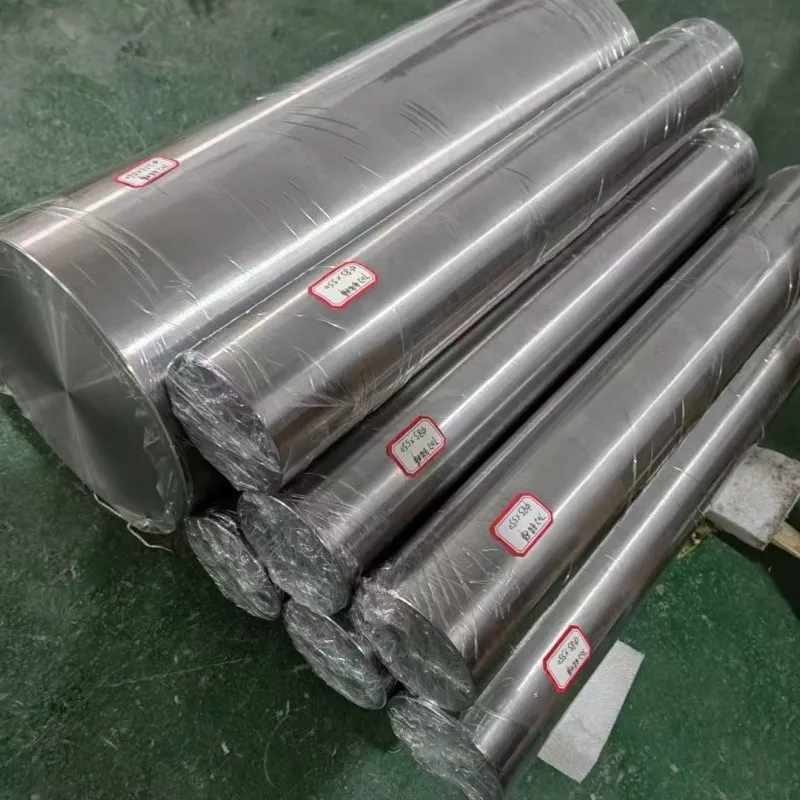


Zirconium Rod provides solid round stock for machined chemical-process components, shafts, fasteners, electrodes, fittings, laboratory hardware, and custom equipment details. It gives the machine shop a continuous section that can be turned, faced, drilled, threaded, milled, or cut into repeated blanks. Zirconium is considered for selected corrosive environments, while the rod form is chosen because the finished part needs substantial solid geometry or features arranged around a central axis.
The efficient purchase decision starts with the finished component rather than the largest available bar. An approved zirconium grade establishes material identity; the part drawing establishes stock diameter, cleanup allowance, cut length, and retained surfaces. Delivery condition and straightness influence machining, especially on long shafts or small diameters. A full bar gives the customer control over nesting, while prepared blanks reduce saw work and simplify piece tracking. Ground rod is useful when the outside diameter remains functional, but it can add cost without benefit when the entire surface will be turned away. Zirconium Rod therefore works best as deliberately sized machining input, connected to the final envelope, service medium, and planned route through the shop.

Work Backward From the Finished Envelope
A shaft with a small turned diameter, a flange-like shoulder, and a deep bore may call for a larger starting size than a simple pin. Send the drawing or at least the maximum finished diameter, overall length, major shoulders, holes, threads, and setup faces. The machining team can then allow for facing, grip stock, cleanup, and process variation without surrounding the part with unnecessary metal.
Stock that is too small may leave uncleaned surface on a sealing or bearing area. Excessive oversize increases purchase mass, turning time, chip volume, and tool exposure. The lowest rod price per kilogram can therefore produce the higher finished-part cost. Comparing offered starting diameter and yield per bar gives a more useful commercial picture than comparing raw weight alone.
| Rod supply form | Best suited to | Key order details |
|---|---|---|
| Full stock length | Mixed cut plans and customer-controlled machining | Length range, support, end state, bundle identity |
| Sawn blanks | Repeated components sharing one diameter | Blank length, cut allowance, piece count, marking |
| Ground round stock | Parts retaining the delivered outside surface | Final diameter, usable zone, finish, straightness |
| Drawing-based component | Projects seeking one source for material and machining | Revision, datums, features, inspection, protected faces |
Material Identity Comes Before Machining Detail
Zirconium is a material family, so the exact grade or controlled composition basis needs to be named. Project requirements may also identify the delivered metallurgical condition and particular record content. Those choices are established from the application and cannot be derived from a round-stock photograph. If an alternative grade is offered, treat it as a distinct technical option rather than a silent replacement.
The process environment remains relevant after grade selection. Provide the chemicals present during normal operation, cleaning, startup, upset, and shutdown, together with temperature, concentration, flow, deposits, and adjoining materials. This information allows the project team to evaluate whether the selected grade belongs in the assembly. It also highlights wetted, sealing, or crevice-prone areas that deserve protection during machining and handling.
Machining Strategy Changes the Useful Stock
Turning an external profile is different from deep drilling a long passage or creating a thin tubular wall from solid rod. Tool access, workholding, chip evacuation, heat management, and intermediate stress relief decisions can affect the route. For difficult geometry, use development blanks from the intended grade and diameter rather than proving the process on unrelated metal. The trial can establish datum sequence, removable stock, inspection stages, and the surfaces most vulnerable to damage.
Long slender components need a realistic straightness basis and a plan for support. A rod checked across one span may behave differently when chucked, steadied, or supported between centers. Identify the functional length and final operation so the delivered condition can be evaluated in a way that relates to the machine setup. When the outer surface will be completely removed, stock-level cosmetic demands should not overshadow subsurface quality and sufficient cleanup.
Cut Planning Can Recover More Value Than a Lower Unit Price
Several part numbers may share the same zirconium grade and starting diameter. A combined schedule lets long and short blanks nest across available stock, reducing unusable remnants. State whether saw kerf, facing stock, and test samples are included in the calculation. For recurring work, retain the successful cut logic alongside the drawing revision so a later release does not repeat the original yield exercise.

Rod, Pipe, or a Grade-Specific Round
A part with a substantial bore may use Zirconium Seamless Pipe to reduce drilling and material removal, provided the available wall gives enough machining stock. Where the design already specifies that grade, R60702 Zirconium Rod offers a more specific material starting point. Neither form is automatically preferable; the decision follows final section, grade, properties, tolerance cleanup, and process availability.
Inspect the Features That Survive Conversion
Incoming checks commonly cover the requested material record, diameter, length, quantity, surface, straightness when functional, and lot identity. Additional examination needs a defined purpose, method, sample extent, and acceptance basis. If the order includes finished machining, the inspection plan shifts toward drawing dimensions, datums, thread features, bore geometry, and named surfaces. Material evidence and part inspection then remain linked without being treated as interchangeable.
| Quotation input | Commercial or technical effect |
|---|---|
| Approved grade and condition | Sets the material route and supporting records |
| Finished drawing or machining envelope | Determines practical starting diameter and allowance |
| Bar lengths and cut schedule | Reveals yield, kerf, remnants, and piece tracking |
| Retained surface and straightness needs | Separates useful stock controls from removable finish |
| Inspection and delivery level | Clarifies whether the offer ends at rod, blank, or component |
Rods travel best on rigid support with separation where retained surfaces could rub. Small blanks can be placed in divided trays or labeled groups to prevent mixing. Identification should connect every package or marked piece to the corresponding material lot and drawing line without entering a sealing, wetted, or highly loaded area.
Questions From Rod and Machining Programs
When is ground zirconium rod worth specifying?
Use it when the supplied diameter, straightness, or finish remains part of the finished component or meaningfully reduces later work. Parts machined across every outside surface may gain little from that extra preparation.
How is machining allowance selected?
Base it on the incoming surface, stock variation, workholding, setup sequence, part geometry, and machine capability. The finished drawing provides the starting point for this decision.
Can rod and seamless pipe be substituted for one another?
Only after comparing material identity, wall or bore availability, cleanup stock, mechanical needs, and the complete process route. Their cross-sections create different machining options.
What makes a first machining trial useful?
Use the intended grade and stock size, record tool and setup choices, measure critical features at planned stages, and preserve the blank identity through final review.
How should cut blanks remain traceable?
Give each piece or controlled group an identifier tied to the parent rod, material record, cut plan, part number, and drawing revision.
Build the Rod Order Around Accepted Parts
Request Zirconium Rod with the selected grade, condition, diameter, lengths, quantity, surface, straightness basis where needed, and record package. Add the finished geometry, stock allowance, cutting arrangement, machining scope, service setting, and retained-surface priorities. State whether delivery ends at full bar, cut blank, ground stock, or finished component. This structure lets each offer reveal its material yield and included work while giving the machining shop stock that fits the real part.
Hot Tags: Zirconium Rod, China Zirconium Rod manufacturers, suppliers, factory, Industrial Zirconium Processing Parts, yttrium stabilized zirconium oxide, Pure Zirconium and Alloy Zirconium Wire, zirconium diboride, anodizing zirconium, zirc material


