

Hey there! As a zirconium supplier, I've been diving deep into the world of zirconium casting. It's a fascinating process, but like any manufacturing technique, there's always room for improvement. So, let's talk about how we can enhance zirconium casting.
Understanding Zirconium Casting
First off, let's quickly go over what zirconium casting is. Zirconium is a super useful metal. It's strong, corrosion - resistant, and has some pretty unique thermal properties. In casting, we take zirconium in its molten form and pour it into a mold to create various shapes. These can range from small, intricate parts for the jewelry industry to large components used in aerospace and chemical processing.
Quality of Raw Materials
One of the most crucial aspects of enhancing zirconium casting is starting with high - quality raw materials. You know, garbage in, garbage out. As a supplier, I make sure that the zirconium I provide is of the purest grade possible. Impurities can really mess up the casting process. They can cause defects like porosity, inclusions, and uneven grain structures.
For example, if there are traces of other metals or non - metallic substances in the zirconium, they can react differently during the melting and solidification process. This can lead to weak spots in the final cast product. So, I source my zirconium from reliable mines and use advanced purification techniques to ensure its purity. And if you're looking for high - quality zirconium products like Industrial Zirconium Processing Parts, you can count on me to provide the best raw materials.
Melting Process
The melting process is where the magic starts. To enhance zirconium casting, we need to control the melting conditions very precisely. Zirconium has a high melting point, around 1855°C (3371°F). That means we need a powerful heat source, like an electric arc furnace or an induction furnace.
In an electric arc furnace, an electric arc is created between electrodes, and the heat generated from the arc melts the zirconium. The advantage of this method is that it can reach very high temperatures quickly. However, we need to be careful about the atmosphere inside the furnace. Zirconium can react with oxygen and nitrogen at high temperatures, forming oxides and nitrides. These can again lead to casting defects.
So, we usually use an inert gas, like argon, to create a protective atmosphere. This prevents the zirconium from reacting with the surrounding air. By carefully controlling the temperature, the heating rate, and the atmosphere, we can ensure that the zirconium melts evenly and without any unwanted reactions.
Mold Design
The mold is like the blueprint for our cast product. A well - designed mold can make a huge difference in the quality of the final casting. First of all, the mold material needs to be able to withstand the high temperatures of molten zirconium. Materials like graphite, ceramic, and some special alloys are commonly used.
The shape and size of the mold also matter. We need to consider factors like shrinkage. Zirconium shrinks as it cools and solidifies. So, the mold needs to be slightly larger than the desired final product to account for this shrinkage. Also, the mold should have proper gating and riser systems. Gating is the system that allows the molten zirconium to flow into the mold cavity, while risers are reservoirs of molten metal that supply additional material as the casting shrinks during solidification.
A good mold design can reduce the chances of defects like misruns (when the molten metal doesn't fill the entire mold cavity) and cold shuts (where two streams of molten metal meet but don't fuse properly). If you're interested in using high - quality zirconium for casting complex parts, you might also want to check out Chromium Target Material, which can be used in some specialized casting applications.
Cooling and Solidification
Once the molten zirconium is in the mold, the cooling and solidification process begins. This is another critical step in enhancing zirconium casting. The rate of cooling can have a big impact on the microstructure of the cast product.

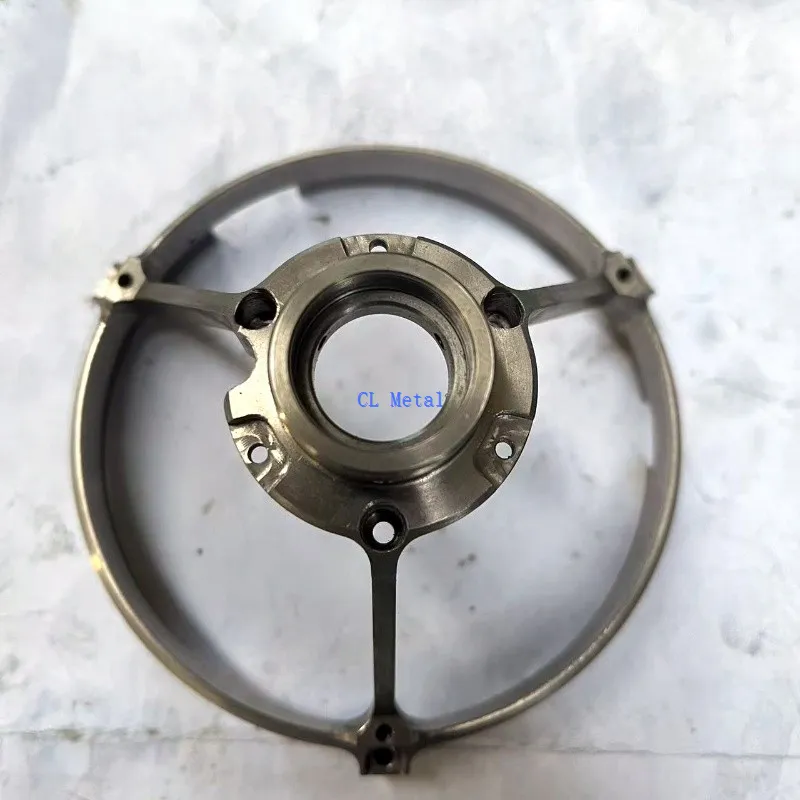
If the cooling rate is too fast, the zirconium may form a fine - grained structure, which can make the product brittle. On the other hand, if the cooling rate is too slow, the grains may grow too large, leading to reduced mechanical properties. So, we need to control the cooling rate carefully.
One way to do this is by using different cooling media. For example, we can use air cooling, water cooling, or a combination of both. We can also insulate the mold in certain areas to slow down the cooling rate in those parts. By controlling the cooling and solidification process, we can achieve a more uniform microstructure and better mechanical properties in the final cast product.
Post - Casting Treatments
After the casting is solidified, there are still some steps we can take to enhance its quality. Heat treatment is one of the most common post - casting treatments. By heating the cast product to a specific temperature and then cooling it at a controlled rate, we can change its microstructure and improve its mechanical properties.
For example, annealing can be used to relieve internal stresses in the casting. This makes the product more stable and less likely to crack or deform over time. Quenching and tempering can be used to increase the hardness and strength of the zirconium casting.
Surface finishing is another important post - casting treatment. We can use processes like grinding, polishing, and coating to improve the surface quality of the casting. A smooth surface not only looks better but also reduces the risk of corrosion and wear. If you're in need of high - quality zirconium wire for post - casting applications, Pure Zirconium and Alloy Zirconium Wire is a great option.
Quality Control
Throughout the entire zirconium casting process, quality control is essential. We need to use various inspection techniques to ensure that the cast products meet the required standards. Non - destructive testing methods, like ultrasonic testing, X - ray testing, and magnetic particle testing, can be used to detect internal defects without damaging the casting.
Destructive testing, such as tensile testing and hardness testing, can be used to evaluate the mechanical properties of the casting. By regularly testing the cast products at different stages of the process, we can identify any issues early on and take corrective actions.
Conclusion
Enhancing zirconium casting is a multi - step process that involves careful control of raw materials, melting, mold design, cooling, post - casting treatments, and quality control. As a zirconium supplier, I'm committed to providing the best products and solutions to help you achieve high - quality zirconium castings.
If you're interested in purchasing zirconium for your casting needs or have any questions about how to enhance your zirconium casting process, don't hesitate to reach out. Let's work together to take your zirconium casting to the next level!
References
- "Metallurgy of Zirconium" by various authors
- "Casting Technology Handbook" by an industry expert group