

Hey there! As a supplier of tungsten plates, I've got a ton of knowledge about how the composition of these plates can really shake up their properties. Let's dive right in and explore this fascinating topic.
First off, pure tungsten is a pretty amazing material on its own. It's got the highest melting point of all metals, clocking in at a whopping 3,422°C. That's seriously hot! It's also super dense, with a density of about 19.25 g/cm³. This high density makes it great for applications where you need a lot of mass in a small space, like in counterweights or radiation shielding.
But here's the thing: pure tungsten can be a bit of a pain to work with. It's really hard and brittle, which means it can crack or break easily if you're not careful. That's where adding other elements comes in. By tweaking the composition of the tungsten plate, we can change its properties to make it more useful for different applications.
Let's start with the most common alloying elements used in tungsten plates: nickel, iron, and copper. When we add these elements to tungsten, we create what's called a tungsten heavy alloy. These alloys typically contain between 90% and 97% tungsten, with the rest being made up of the other elements.
The addition of nickel and iron helps to improve the ductility of the tungsten plate. Ductility is the ability of a material to be stretched or deformed without breaking. By making the plate more ductile, it becomes easier to machine and shape into different forms. This is especially important for applications where the plate needs to be precision-machined, like in the aerospace or defense industries.
Copper is another important alloying element in tungsten plates. When added to tungsten, copper helps to improve the electrical and thermal conductivity of the material. This makes it ideal for applications where heat or electricity needs to be transferred efficiently, like in electrical contacts or heat sinks.
Now, let's talk about some of the other elements that can be added to tungsten plates to change their properties. One of these elements is rhenium. Rhenium is a rare and expensive metal, but it has some amazing properties when combined with tungsten.
When rhenium is added to tungsten, it helps to improve the high-temperature strength and ductility of the material. This makes it ideal for applications where the plate needs to withstand extreme temperatures, like in rocket nozzles or nuclear reactors.
Another element that can be added to tungsten plates is molybdenum. Molybdenum is similar to tungsten in many ways, but it has a lower melting point and is more ductile. When added to tungsten, molybdenum helps to improve the machinability and weldability of the material. This makes it easier to work with and allows for more complex shapes to be created.
So, how do these different alloying elements affect the specific properties of tungsten plates? Let's take a closer look.
Mechanical Properties
The mechanical properties of a tungsten plate, such as its strength, hardness, and ductility, are greatly influenced by its composition. As we mentioned earlier, adding nickel and iron to tungsten helps to improve its ductility, making it easier to machine and shape. On the other hand, adding rhenium or molybdenum can help to improve the high-temperature strength and hardness of the material.
Thermal Properties
The thermal properties of a tungsten plate, such as its melting point, thermal conductivity, and coefficient of thermal expansion, are also affected by its composition. Pure tungsten has a very high melting point, but adding other elements can lower it slightly. Copper, for example, helps to improve the thermal conductivity of the material, making it a better conductor of heat.
Electrical Properties
The electrical properties of a tungsten plate, such as its electrical conductivity and resistivity, are also influenced by its composition. Adding copper to tungsten helps to improve its electrical conductivity, making it a better conductor of electricity. This is why tungsten copper alloys are often used in electrical applications.
Chemical Properties
The chemical properties of a tungsten plate, such as its corrosion resistance and reactivity, are also affected by its composition. Pure tungsten is relatively resistant to corrosion, but adding other elements can improve its corrosion resistance even further. For example, adding nickel and chromium to tungsten can help to make it more resistant to corrosion in certain environments.
Now that we've explored how the composition of tungsten plates affects their properties, let's talk about some of the different applications for these plates.
Aerospace and Defense
Tungsten plates are widely used in the aerospace and defense industries due to their high density, strength, and resistance to heat and corrosion. They are used in a variety of applications, including counterweights, radiation shielding, and missile components.
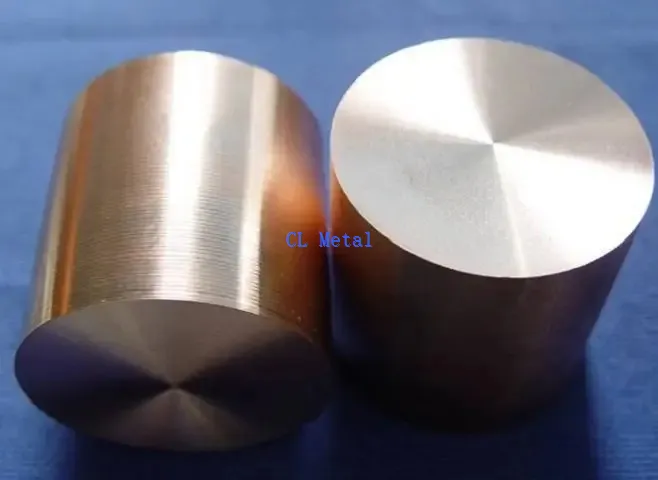

Electrical and Electronics
Tungsten plates are also used in the electrical and electronics industries due to their high electrical conductivity and thermal conductivity. They are used in a variety of applications, including electrical contacts, heat sinks, and semiconductor components.
Medical and Dental
Tungsten plates are used in the medical and dental industries due to their high density and radiation shielding properties. They are used in a variety of applications, including radiation therapy shields, dental implants, and surgical instruments.
Industrial
Tungsten plates are used in a variety of industrial applications due to their high strength, hardness, and resistance to wear and corrosion. They are used in a variety of applications, including cutting tools, dies, and molds.
As you can see, the composition of tungsten plates plays a crucial role in determining their properties and applications. By carefully selecting the alloying elements and their proportions, we can create tungsten plates with specific properties that are tailored to meet the needs of different industries and applications.
If you're in the market for tungsten plates, or any of our other tungsten products like Tungsten Rod, High-density Tungsten Alloy Ring, or Tungsten Copper Alloy, I'd love to chat with you. We've got a wide range of options available, and we can work with you to find the perfect solution for your needs. Just reach out, and let's start the conversation about your procurement needs.
References
- Smith, J. D. (2018). Tungsten and Tungsten Alloys. ASM International.
- Jones, R. W. (2019). Handbook of Tungsten and Tungsten Alloys. Elsevier.
- Brown, S. M. (2020). Tungsten: Properties, Applications, and Technology. Springer.