

A useful specification for superelastic Nitinol wire cannot be reduced to diameter, nickel content and a target Af value. Those items identify part of the material, but they do not tell the seller how the wire should behave at the customer's use temperature, whether it must arrive straight or on a spool, what processing follows delivery, or which condition will be tested. Two coils with similar chemistry can produce different results after cold work, annealing and shape setting.
The buyer's first task is therefore to define the functional handoff. Some customers need wire that can be evaluated in its delivered condition. Others buy cold-worked or partially processed wire because the final transformation response will be developed during their own heat treatment. Both routes can be valid. Trouble starts when the request names a finished-part behavior but the quotation covers only an incoming raw-material condition.
This guide is written for engineers and procurement teams preparing a real RFQ, not for choosing Nitinol from a property list. It focuses on the decisions that affect manufacturability and acceptance: intended response, use-temperature window, test method, diameter control, tensile evidence, surface, cast and helix, continuous length, downstream processing, lot traceability and packaging. Device-specific qualification remains the buyer's responsibility.
Specify superelastic Nitinol wire at the point where its function will be accepted. Name the use-temperature window, delivered condition, transformation test method, diameter, surface, spool behavior and later heat treatment. Chemistry starts the conversation, but controlled processing and an agreed test condition make the purchase requirement meaningful.
Begin with the intended behavior, not the alloy nickname
Separate superelastic service from shape-memory actuation
Superelastic components are generally expected to recover strain through stress-induced transformation at the service temperature. Shape-memory actuators are designed around thermally driven recovery through a temperature change. Both behaviors come from nickel-titanium, but they lead to different acceptance questions. A wire described only as "shape memory alloy" leaves the quoting team unable to tell which response matters.
For a superelastic application, describe the temperature range in which loading and recovery occur, the deformation mode, expected strain, cycle requirement and unacceptable residual set. These are design inputs, not promises that a raw wire certificate alone can demonstrate finished-component life. Still, they help the material team understand why a transformation-temperature window, mechanical condition or surface requirement is being requested.
Define whether the requirement applies before or after shape setting
The process stage is often the most important missing sentence in a Nitinol wire RFQ. If the wire will be laser cut, wound around a mandrel, crimped, heat set, pickled, electropolished or joined after delivery, those operations can alter dimensions, surface and functional response. State whether the requested data applies to as-supplied wire, a coupon treated with an agreed cycle, or the customer's finished part.
A peer-reviewed study indexed by PubMed examined the effect of heat-treatment time and temperature on Nitinol wires and found that heat-treatment choices changed transformation behavior and shape-memory response. That does not provide a universal production recipe. It supports a narrower purchasing point: later heat treatment is a controlled variable and should not be omitted from the handoff between wire seller and component processor.
Build the RFQ in layers
The following table is a working review tool rather than a prefilled specification. Leave a line open if it is genuinely under development, but label it as a development variable and agree how it will be closed. Silent blanks are more dangerous because each party may fill them with a different assumption.
| RFQ layer | What to state | Why the seller needs it | Common ambiguity to remove |
|---|---|---|---|
| Function | Superelastic recovery, thermal actuation, guide function or process feedstock. | Connects material condition and evidence to intended use. | "Nitinol wire" without a functional state. |
| Temperature | Use-temperature range, storage extremes and any processing heat exposure. | Transformation requirements only make sense relative to temperature and condition. | One Af number with no test point or use window. |
| Geometry | Diameter, tolerance, straight length or spool, cut-length tolerance and end requirements. | Determines process route, yield, inspection and handling. | Nominal diameter with no sampling or acceptance rule. |
| Condition | Cold-worked, straightened, annealed, shape-set or another agreed delivered state. | Condition affects strength, ductility, recovery and later process response. | Using "superelastic" as if it fully defines processing history. |
| Surface | Oxide-bearing, mechanically finished, chemically treated or polished condition, with defect criteria. | Surface can affect handling, joining, finishing and fatigue-sensitive features. | "Bright" or "clean" without a measurable or visual acceptance basis. |
| Delivery | Spool type, core diameter, continuous length, net weight, cast, helix, labeling and protection. | Controls feeding, identification, storage and usable yield. | A total mass that permits many unusable short lengths. |

Use transformation temperature as a controlled measurement
Af is not meaningful without method and specimen condition
Af, the austenite finish temperature, is often used as a compact purchasing value. It is not self-defining. The order should identify the method, specimen form, pre-test treatment, sample location, number of specimens and reporting rule. A value obtained from a differential scanning calorimetry curve is not automatically equivalent to a functional bend-and-free-recovery result. The methods observe transformation in different ways and have their own scopes.
ASTM Subcommittee F04.15 maintains the relevant material test methods. Its current standards list includes F2004 for transformation temperature by thermal analysis of bend and free recovery, F2082/F2082M for transformation temperature by differential scanning calorimetry, and F2516 for tension testing of nickel-titanium superelastic materials. Buyers should confirm the current edition and scope when releasing an order.
Specimen dimensions can affect method selection
A test name should not be copied onto every diameter without checking specimen suitability. ASTM's active work item WK96773 discusses form and dimension limitations in the transformation-temperature method. A work item is not a published requirement, but it is a useful warning against assuming that one preparation route fits every fine wire, tube or component geometry.
If the delivered wire is too small or otherwise unsuitable for the requested preparation, resolve the alternative before quotation. Options may include a representative specimen from the same lot, a different agreed method, or testing after a defined intermediate process. The certificate must state what was actually tested; it should not imply that a result came directly from a specimen when it did not.
Mechanical data must match the purchasing question
Tensile results do not replace functional cycling
Tension testing can provide useful information on plateau behavior, strength, elongation and permanent set under a defined method. It does not prove fatigue life in a bent, twisted, crimped or laser-cut component. Geometry, surface defects, strain localization, heat setting and the customer's complete cycle can dominate durability. Use incoming tensile evidence to control material consistency, then validate component performance with a test representative of actual service.
Before adding every reported tensile value as an acceptance limit, ask what decision each value supports. A development team may initially want full curves to understand a process window. A mature production order may control fewer characteristics with clear statistical or lot acceptance rules. More certificate columns do not automatically create tighter control; limits that are not connected to function can reject usable material or hide the variable that matters.
Straightness, cast and helix are process inputs
For straight lengths, define the measurement span and the allowable departure rather than asking for "perfectly straight" wire. For spooled wire, state how cast and helix are measured after removal from the spool, how long the sample rests, and what values the feeding process can tolerate. If the wire will be coiled deliberately, a residual curvature may be acceptable. If it must pass through an optical or laser station, the same curvature may cause stoppages.
Select the surface by what happens next
Surface language is often vague because appearance is easy to discuss and difficult to contract. "Black," "bright," "pickled" and "polished" can describe broad routes, but the buyer should connect the requested condition to the next operation. A wire intended for joining may need a different preparation from one that will be overmolded, ground, electropolished or used as temporary tooling.
Visual criteria should distinguish harmless appearance variation from defects that could affect processing or performance. Agree how scratches, seams, pits, adherent oxide, loose residue and handling marks will be evaluated. If fatigue is critical, the finished-component surface and edge condition usually need their own validation after all cutting and heat treatment. Incoming wire inspection is one control point, not the last one.
Cleaning requirements need similar restraint. State prohibited residues, approved handling or cleaning steps, and packaging expectations when they are important. Do not request a generic "medical clean" condition without a defined method and acceptance criterion. The term sounds strict but leaves both parties without an auditable requirement.
Do not transfer a wire specification to foil or tube
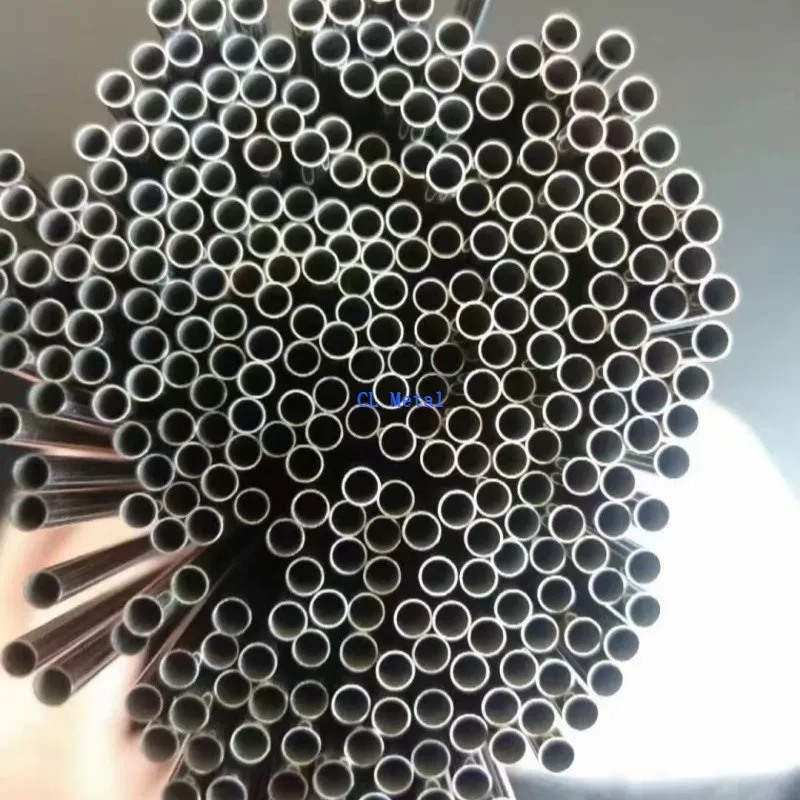
The logic in this guide is deliberately wire-specific. Nitinol foil introduces thickness mapping, flatness, slit-edge or blank-edge requirements and coil protection. Nitinol seamless tube needs an OD-ID-wall hierarchy, concentricity strategy, straightness, end protection and often a tube-specific dimensional report. Copying the wire inspection table onto those products creates paperwork, not control.
The shared requirements should sit above the form drawings: alloy designation, material specification where applicable, restricted chemistry, lot definition, traceability, change notification and record retention. The Nitinol product category shows the related forms, while each product page should be used to begin a form-specific discussion.
Match evidence to risk without claiming device approval
The FDA Nitinol guidance discusses material composition, transformation behavior, mechanical properties, corrosion, biocompatibility and other considerations for medical devices containing Nitinol. Its scope reinforces an important boundary: compliance of raw wire with an agreed material specification is only one input to a finished-device assessment.
Procurement language should reflect that boundary. Ask for heat or lot traceability, the agreed chemistry record, dimensions, test reports and process condition that the wire seller can control. Do not convert those records into unsupported phrases such as "FDA approved wire" or assume they qualify a final implant. The device developer owns design verification, process validation, biological evaluation, sterilization considerations and the applicable regulatory submission.
A practical evidence map
| Decision | Reasonable incoming evidence | What still belongs downstream |
|---|---|---|
| Material identity | Agreed chemistry statement, heat or lot number and traceability record. | Confirmation that the finished component preserves required identity and segregation. |
| Incoming dimensions | Diameter results against the stated sampling and acceptance rule. | Dimensions and geometry after cutting, forming, heat setting and finishing. |
| Functional condition | Transformation or tensile data in the explicitly named specimen condition. | Performance of the finished part through its actual temperature, strain and cycle envelope. |
| Surface | Visual or measured evidence for the agreed incoming finish and defect criteria. | Final surface integrity after all component manufacturing and cleaning operations. |
Release the quotation only after five ambiguities are closed
Confirm the condition represented by every test
Put the specimen condition beside the result on the RFQ and certificate requirement. "Af 10-15 C" is incomplete if one party expects as-supplied wire and the other tests a heat-treated coupon. The same discipline applies to tensile data.
Mark critical dimensions instead of tightening everything
A realistic diameter tolerance tied to the component and process is more useful than a blanket minimum range. Identify any cut-length, end, ovality or straightness requirement separately. If the purchase is by mass, also define minimum continuous length so usable yield is visible.
Describe the downstream process in enough detail to expose conflicts
The seller does not need proprietary device design information to ask whether the wire will be heavily formed, heat set, welded or electropolished. A short process outline can reveal that an incoming surface or condition request conflicts with the later route.
Agree on lot definition and change communication
State whether a delivery can contain more than one heat or processing lot, how each will be labeled, and whether substitutions require approval. For recurring orders, define which process or source changes must be communicated under the customer's quality agreement.
Design packaging around the first operation
A spool should fit the payoff equipment and protect the wire without imprinting, tangling or uncontrolled curvature. Straight lengths need rigid support and end protection. Labels should remain associated with each coil or bundle after the outer carton is opened.
For a program that also purchases foil or tube, read Why Should Nitinol Wire, Foil and Tube Be Quoted Separately in 2026?. It shows how to keep common traceability controls while separating form-specific dimensions, testing, prototype work and commercial assumptions.
Frequently asked engineering and purchasing questions
Should superelastic Nitinol wire be ordered by Af alone?
No. Pair the transformation-temperature requirement with use temperature, delivered condition, test method, specimen preparation and the process stage where acceptance applies. Add mechanical or functional criteria only when they support a defined decision.
Can a supplier guarantee finished-part behavior from raw wire data?
Not without controlling and validating the downstream route. Forming, heat setting, joining, surface finishing and component geometry can change behavior. Incoming data supports material control; finished-part performance needs representative validation.
What should be specified for spooled Nitinol wire?
State spool dimensions, core diameter, net weight range, minimum continuous length, policy on joins, winding protection, labeling, and any cast or helix limits connected to the feeding equipment.
Is ASTM F2063 a complete wire purchase specification?
No single material standard replaces the RFQ. Identify the required edition and scope, then add diameter, condition, transformation or mechanical testing, surface, delivery format, sampling, documentation and downstream-use requirements.
How should a buyer choose between DSC and bend-and-free-recovery testing?
Start with the decision the result must support, then check the current method scope, specimen form and preparation. Agree the method and reporting convention before quotation; do not assume the two methods produce interchangeable acceptance values.
What should be included with the first prototype order?
Include the intended processing sequence, target use window, size and condition, test plan, sample identification, quantity needed for trials, acceptance observations and the questions that must be resolved before production release.
References
- U.S. FDA, Technical Considerations for Non-Clinical Assessment of Medical Devices Containing Nitinol.
- ASTM Subcommittee F04.15, current Nitinol material test methods.
- U.S. FDA recognized consensus standard record for ASTM F2063-18.
- Effect of heat-treatment time and temperature on transformation behavior in Nitinol wires.
- ASTM work item WK96773, specimen form and dimension context for F2082/F2082M.
For a technical wire quotation, provide diameter and tolerance, straight or spool format, delivered condition, use-temperature window, downstream heat treatment, required test methods, surface, continuous length, quantity by size, traceability documents, packaging and destination. Identify which requirements are fixed and which remain prototype variables.