


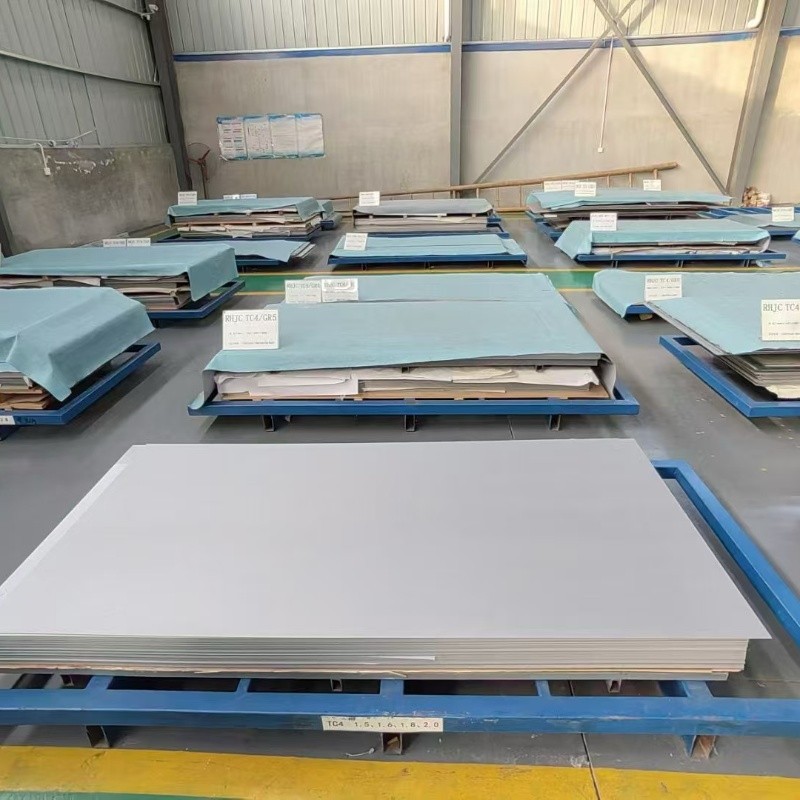

Grade 7 Titanium Plate is a palladium-bearing commercially pure titanium plate for fabricated equipment exposed to demanding chemical-process environments. It combines the corrosion resistance associated with titanium with a palladium addition that gives this grade a distinct place where the process medium, local geometry, or operating history calls for more than a routine commercially pure titanium selection. The value is practical: plate can be cut into vessel sections, tube sheets, covers, liners, transition pieces, and piping components while retaining a material identity suited to corrosive-process fabrication. Its selection starts with the actual medium and component design, not a generic grade comparison.
In chemical equipment, Grade 7 plate brings the specified corrosion performance into a flat form that can be cut, formed, and welded. It is relevant to heat exchangers, process vessels, reactor internals, scrubber sections, piping details, and repair components. The purchasing decision is therefore wider than grade alone: plate dimensions, usable surface, flatness, cut allowance, traceability, and the planned fabrication route all shape the delivered result. This page focuses on those plate-specific decisions so an inquiry can match the supplied form to the equipment work ahead.

Why the Palladium-Bearing Grade Matters
Commercially pure titanium grades remain effective choices across many corrosion applications. Grade 7 is not presented as a universal upgrade or as a substitute selected from price alone. Its palladium-bearing identity is the material distinction that process-equipment teams evaluate when the service environment calls for the Grade 7 option. Comparing it with another commercially pure grade starts with the actual fluid, concentration range, temperature history, aeration, deposits, crevice locations, cleaning media, and contacts with adjacent materials.
Plate, Cut Blank, or Drawing-Based Part
Plate is a starting form, not a single delivery scope. Full mill plate suits customers who will control cutting and fabrication in their own shop. Rectangular blanks reduce initial cutting work while leaving later machining or forming open. Profiled pieces can follow a drawing for vessel heads, baffles, flange rings, support details, or piping transitions. A formed or machined item moves the order further downstream and needs drawing-level features, datums, and acceptance details. Separating these options early makes quotation comparisons more meaningful.
| Delivery form | Useful inquiry detail | Typical downstream work |
|---|---|---|
| Full plate | Thickness, width, length, surface, quantity | Customer cutting and fabrication |
| Rectangular blank | Cut size, edge condition, allowance, marking | Machining, rolling, or pressing |
| Profiled plate part | Drawing, revision, cut route, critical edges | Assembly into equipment |
| Formed component | Geometry, bend areas, protected faces, inspection points | Fit-up and welding |
| Machined detail | Datums, features, removable stock, surface areas | Final assembly or welding |
Thickness, width, and length belong beside the delivery form, not in a separate afterthought. The same nominal plate size carries a different commercial meaning when it is sold as mill plate, a cut blank, or a finished profile. Identify any areas removed by machining, weld preparation, or edge trimming. For nested parts, provide the drawing file, quantity by item, orientation where relevant, and the treatment of remaining material. This keeps usable yield visible without assigning fabricated-part requirements to an unprocessed plate.
Surface and Flatness Follow Fabrication Needs
Surface requirements work best when linked to function. A wetted face, a visible external cover, a weld-preparation zone, and a face intended for later machining may each need different handling. Describe the required surface condition and identify locations where scratches, dents, embedded debris, or handling marks affect the next operation. A bright appearance alone says little about whether a surface has remained suitable for the intended fabrication sequence.
Flatness is equally connected to use. Thin plate for a liner or cover may need continuous support during transit and storage to arrive ready for layout. A heavy plate blank can respond after asymmetric machining, thermal cutting, or welding. State the measurement basis, support condition, inspection area, and the part operation driving the flatness request. This gives the supplier a clear target and avoids treating the condition of incoming plate as the final geometry of a completed assembly.
Plate Roles in Chemical Equipment
Grade 7 Titanium Plate can become shell courses, channel covers, tube sheets, baffles, partition plates, lining panels, nozzle reinforcement details, and process-piping components. Heat exchanger construction often combines large plate areas with many cut openings and welded interfaces. Vessel work may begin with rolled plate sections, formed heads, internal trays, or manway covers. Piping fabrication can use plate for branch details, transitions, collars, and supports where a tube product is not the appropriate starting form.
When the component is a hollow flow path rather than a fabricated plate detail, Grade 7 Titanium Tube is the more direct starting form. Bolted equipment connections can be reviewed separately as Grade 7 Titanium Flange. Linking the drawing to the correct semi-finished form reduces avoidable cutting, welding, and material loss.

Plan Cutting, Forming, and Welding Together
Cutting method influences edge condition, heat input, cleanup allowance, and the route into the next operation. Specify whether edges are supplied as-cut, trimmed, machined, or prepared for welding. Fine features, close nesting, small internal radii, and narrow ligaments are drawing details that merit early review because they affect material use and production sequence. Protect designated wetted faces from contact with unsuitable shop materials during handling, cutting, and deburring.
For forming, share bend geometry, part orientation, tooling contact areas, and any surface protection required through the operation. Plate behavior after rolling, pressing, or bending is tied to the part geometry and condition, so representative fabrication information is more useful than a vague request for a formed plate. Welding adds joint design, edge preparation, shielding arrangement, filler selection, cleaning practice, and examination scope to the discussion. The plate certificate maintains material identity; the fabrication plan establishes how that plate becomes a weldable component.
Customization, Records, and Export Packing
Customization can cover nonstandard plan sizes, rectangular blanks, drawn profiles, cut-edge condition, piece marking, protected faces, and packing configuration. A concise drawing plus a short list of critical requirements is often more precise than a long general note. Where a project names ASTM B265 or another governing plate document, include the revision and any order-specific additions. This gives the requested plate a defined material and acceptance basis without inventing requirements that do not appear in the project.
| Control area | Records or packing detail | Why it matters |
|---|---|---|
| Material identity | Grade, heat or lot, plate record | Links cut pieces to supplied plate |
| Dimensions | Thickness and plan-size inspection | Supports fit and usable yield review |
| Surface and edges | Visual condition and specified edge state | Protects later fabrication steps |
| Cut parts | Part mark, drawing reference, quantity | Keeps profiles identifiable after separation |
| Export packing | Rigid base, separators, corner protection, labels | Helps preserve plate condition in transit |
Inspection can be matched to the supplied stage: certificate review, grade identification where named, thickness, width, length, surface, flatness, edge state, and cut-part dimensions are practical examples. Additional examinations are most useful when the order states the method, coverage, and reporting expectation. For export, flat plate benefits from a clean rigid base, separators that prevent face-to-face abrasion, restrained movement, and corner protection. Labels can carry grade, lot or heat reference, dimensions, quantity, and drawing reference so receiving teams can retain the chain of identification.
Questions Before Ordering Grade 7 Plate
Why choose Grade 7 instead of another commercially pure titanium grade?
Grade 7 is distinguished by its palladium addition. The choice belongs to the actual corrosion review, including medium, concentration, temperature, aeration, crevice geometry, deposits, cleaning chemistry, and operating history. It is not automatically the economical answer for every titanium plate application.
Does ASTM B265 cover every fabricated plate requirement?
ASTM B265 can provide the ordered material basis for plate when the project names it, but a cut, formed, welded, or machined component needs additional drawing and acceptance details. Edge condition, protected faces, datums, fabrication scope, and finished dimensions do not appear merely by naming the plate specification.
Can Grade 7 plate be supplied as profiles rather than full sheets?
Profiles, rings, rectangular blanks, and drawing-based pieces can be evaluated. The quotation needs the current drawing, quantity by item, required cut condition, machining or forming allowance, part marking, and any face that needs protection during cutting and packing.
What information is relevant when the plate will be welded?
Provide the joint location, edge preparation, part geometry, downstream forming sequence, protected surfaces, and required examination. Welding procedure qualification and fabrication control remain separate from the incoming plate certificate, so the order needs to identify which stage is included.
Details Needed for a Grade 7 Plate Quotation
Start with Grade 7 Titanium Plate, the governing plate document when applicable, thickness, width, length, quantity, and required delivery form. Add the process medium and operating context that explain the material selection, then state surface, flatness, cut, forming, welding, marking, inspection, and packing needs relevant to the component. For cut or formed work, include the current drawing revision and identify critical faces or interfaces. Destination and requested delivery timing complete the practical commercial picture without turning the inquiry into a generic checklist.
Hot Tags: Grade 7 Titanium Plate, China Grade 7 Titanium Plate manufacturers, suppliers, factory, titanium mineral, titanium stick, titanium quartz, titanium dioxide anatase, titanium cost per kg, cutting titanium


