


Grade 1 Titanium Wire is commercially pure titanium wire selected for parts that benefit from a formable small section and a corrosion-conscious material choice. It can be converted into wound shapes, woven structures, ties, retainers, bent details, or short straight pieces when the completed design is consistent with Grade 1 strength. Its appeal is not a vague promise of softness. The usable result comes from matching the delivery condition, diameter, coil character, and surface state to the actual forming sequence.
This wire is especially relevant when a component takes multiple bends or wraps and the design values ductility more than the higher strength available from an alloyed titanium grade. Even then, the part geometry controls the decision. A tight tool path, flattening step, joining operation, or automated payoff can expose issues that are invisible in a material name. The purchase description should therefore explain what the wire will do, how it will be handled, and which features remain functional after forming. That approach gives production teams a useful incoming material without treating Grade 1 as interchangeable with every product described as pure titanium.
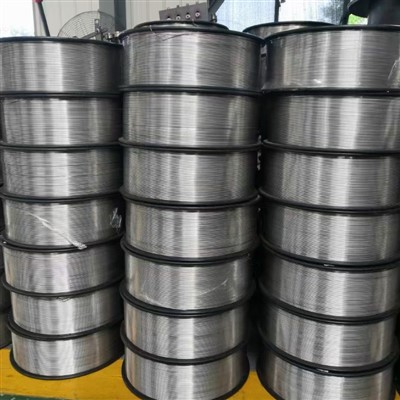
Use Grade 1 Where Forming Drives the Choice
Typical production routes include bending, winding, weaving, knitting, straightening, cutting, and localized flattening. Each route uses ductility differently. A woven screen repeatedly redirects the wire, while a tie may need only a few controlled bends. A short pin relies more on straightness and end quality than on coil response. Explain the sequence and identify the most highly worked areas so the proposed wire can be evaluated in the correct context.
Commercially pure does not mean grade-free. Grade 1 has its own material identity and should appear with the applicable project basis and condition. If an alternative grade is commercially attractive, compare it as a deviation rather than silently changing the order. Moving to stronger wire can alter springback and forming margin; moving to another pure grade can still change the accepted material boundary.
| Component concept | Dominant buying question | Useful production detail |
|---|---|---|
| Woven element | Will the wire tolerate repeated redirection? | Weave path, opening geometry, visible face |
| Wound shape | Can the coil form consistently around tooling? | Mandrel, wrap count, release and springback |
| Corrosion-service tie | Does Grade 1 suit the complete exposure? | Fluid, temperature, crevices, adjacent metals |
| Cut straight detail | Will usable lengths recover from the coil? | Length, straightness basis, ends and bundle |
Translate Tooling Needs Into Wire Controls
Diameter and tolerance influence feed clearance, finished section, and the force needed to form the wire. Roundness is worth naming where guides, holes, or a flattened feature depend on it; otherwise it can become an added inspection with little effect on the part. Delivery condition should be a recognized material state or a measurable basis, not an informal request for extra-soft wire.
Springback, local marking, and dimensional recovery are best studied with the intended tool. Share the bend sequence, orientation, contact surfaces, and any intermediate straightening. If the wire will be flattened or headed, include the resulting section and the areas examined after deformation. A trial quantity from the proposed supply condition allows the part team to observe cracking, shape recovery, and surface change before setting routine lot requirements.
Choose Coil or Straight Supply for the First Operation
Automatic equipment needs a package that physically fits and feeds predictably. The enquiry can include spool flange, barrel, bore, winding direction, payoff orientation, end restraint, and the amount carried on each unit. Cast and helix are useful only when their test method reflects the line. Over-specifying those characteristics without reference to a feed path may exclude workable wire while failing to prevent a poorly wound package.
Manual forming may favor compact coils that are easy to stage at a bench. Straight lengths avoid an in-house straightening step but need a defined cut length, end condition, and support arrangement. During respooling or cutting, grade and lot identity must follow the converted units. Splices, package changes, and mixed lots should be either prohibited or clearly identified according to production needs.

Surface Requirements Follow Exposure and Appearance
A visible weave, hidden restraint, welded assembly, and wetted process detail warrant distinct surface descriptions. Identify retained surfaces and the conditions that would interfere with forming, joining, appearance, or service. Deep scratches, oxide, embedded debris, stains, and handling marks can then be assessed against their actual effect instead of an arbitrary cosmetic ideal.
For corrosive exposure, material selection requires the full environment: process constituents, temperature history, deposits, stagnant areas, cleaning agents, and contact with dissimilar metals. Grade 1 may be appropriate in selected duties, but the wire certificate does not evaluate the completed crevice or joined assembly. Keep the exposure record with the part design, particularly when service chemistry can change.
Different material and geometry choices solve different problems. Grade 1 Titanium Rod suits larger straight blanks and machined details while preserving the commercially pure grade. When the design needs substantially higher strength and accepts less cold-forming margin, the confirmed Grade 5 Titanium Rod page provides a Ti-6Al-4V material comparison. Grade 5 wire follows the same higher-strength alloy choice but needs its own wire condition, forming trial, and package definition.
| Receiving focus | What can be checked | Why it matters next |
|---|---|---|
| Identity | Grade, condition, lot and package labels | Prevents mixing similar-looking titanium wire |
| Section | Diameter and any justified shape check | Supports feed fit and final geometry |
| Surface | Agreed visual condition on sampled wire | Protects forming and exposed areas |
| Delivery geometry | Winding, ends, spool fit or straight bundle | Preserves handling through line setup |
| Traceability | Lot map after conversion | Links test results to each supply unit |
Practical Questions About Grade 1 Wire
When should Grade 1 wire be compared with higher-strength Grade 5?
Compare them when both finished load and forming severity are known. Grade 1 favors ductility and extensive forming; Ti-6Al-4V Grade 5 favors strength but normally requires a different forming and springback evaluation.
Can this general wire be used as a welding consumable?
Only when the purchase also satisfies the joining procedure's approved consumable identity, cleanliness, preparation, and package requirements. The fact that both products are titanium wire is not enough.
When are straight lengths preferable to coils?
They suit work that needs repeatable cut pieces and cannot accept a separate straightening step. Specify usable length, measurement support, end treatment, bundle size, and protection against bending in transit.
How should similar coils be kept apart?
Use clear package labels, lot-separated conversion areas, retained travelers, and distinct storage locations. Grade, diameter, condition, lot, and quantity should remain readable until the material is consumed.
Prepare a Production-Oriented Enquiry
Request Grade 1 Titanium Wire with the material basis, delivery condition, diameter, tolerance, total quantity, and desired package form. Describe the finished part, forming sequence, tooling-sensitive features, surface purpose, service environment, trial plan, and receiving checks. For spools, add the equipment interface and winding details; for straight pieces, state length, ends, and support. Include documentation, lot separation, labels, destination, and required timing so quotations reflect the wire as it will actually enter production.
Hot Tags: Grade 1 Titanium Wire, China Grade 1 Titanium Wire manufacturers, suppliers, factory, ti au, titanium, titanium steel, tio2 anatase, titanium price per gram, titanium foam


