


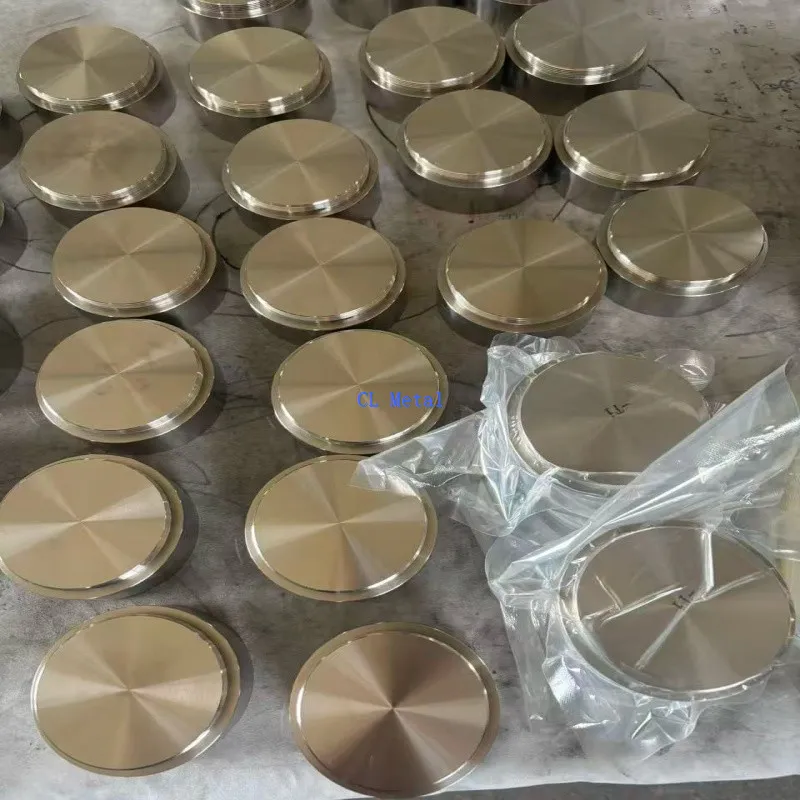
Zirconium Sputtering Target is a zirconium source for metallic and reactive physical vapor deposition. It is prepared as a disc, plate, or drawing-controlled cathode part that presents the selected material to the plasma while maintaining the mounting and thermal interfaces required by the deposition equipment. Coating teams use zirconium targets for film-development and qualified production work in which zirconium is the approved source element. The target brings controlled chemistry and a machinable physical form into the chamber; gas delivery and the rest of the PVD recipe determine how that source develops into a film.
Zirconium buying decisions have one material-specific detail that deserves early attention: the treatment of hafnium in purity calculations and reports. That basis must be aligned before percentages can be compared. The physical decision then follows the cathode, including face geometry, thickness, rear contact, edge form, backing plate or bond, and cooling relationship. A target that meets one side but not the other is incomplete. Procurement should release chemistry and construction together, then qualify the new lot or design under the established chamber procedure.

Set the Zirconium and Hafnium Basis First
A headline purity percentage is meaningful only after the calculation convention is known. Hafnium may be included with zirconium, excluded from the zirconium result, or listed separately, depending on the reporting basis used for the material. The order should state which treatment the coating program requires and how the certificate is expected to display it. Quotations using different conventions should not be ranked by the larger number.
Beyond that distinction, name the approved zirconium grade or composition, critical impurity controls, and any required analytical format. The strongest specification focuses on elements connected to process history or film sensitivity. If actual lot values are needed, say so; if a defined analytical method is part of the project, include it before quotation. Avoid adding unsupported limits that cannot be interpreted against the laboratory's detection capability.
| Release topic | Order content | Evidence at receipt |
|---|---|---|
| Zirconium identity | Grade or approved composition basis | Lot-linked material record |
| Hafnium treatment | Included, excluded, or separately controlled | Certificate using the same convention |
| Cathode fit | Working face, thickness, rear and edge features | Dimensional result against drawing |
| Thermal interface | Monolithic, backed, or bonded construction | Contact-face or assembly inspection |
| Clean condition | Face preparation, prohibited residues, protection | Visual and packaging check |
Translate the Cathode Into a Complete Target Drawing
Release the working-face diameter or outline, target thickness, rear-face geometry, edge profile, mounting holes or clamp regions, and any cooling-contact surface. Functional tolerances should reference clear datums. An equipment model can support review, but it does not account for alternate cathode revisions or local modifications. The target drawing remains the common record for machining, inspection, and later reorders.
A used target is helpful only when wear is understood. Mark the erosion track, reduced rim, distorted zones, and any repair before measuring it. Protected surfaces under clamps or outside the active region are better clues to original geometry. Where an interface is uncertain, compare the clean cathode and arrange a first-article fit before committing the production quantity.
Monolithic and Backed Constructions Need Different Scope
A monolithic zirconium target carries its working and mounting geometry in one material body. A backed target adds another component and a thermal joint. The purchase description should identify backing material, dimensions, source, and ownership. If the backing is supplied by the customer, agree how it will be stripped, cleaned, inspected, and handled if corrosion, distortion, damaged threads, or an unacceptable contact surface is found.
For a bonded construction, define the joining route when controlled by the approved design, the intended coverage, any permissible exclusion zone, and how the completed interface will be evaluated. A vague requirement for a perfect bond cannot be inspected consistently. Reporting should connect the target lot, backing identity, assembly drawing, and examination result. Finished target and backing dimensions may need separate inspection points where joining and final machining alter the assembly.
Reactive Deposition Changes the Process, Not the Target Identity
The zirconium target remains the metallic source whether the chamber deposits a metallic film or operates with a reactive gas. Film phase, color, stress, hardness, adhesion, and growth rate respond to gas flow and control, chamber history, power, substrate position and preparation, temperature, and conditioning. These outcomes cannot be assigned to target chemistry alone. The buyer's qualified recipe defines the film; the material order preserves one controlled input to that recipe.
For a new lot, install under the established clean procedure and use a recorded ramp. Keep other major variables stable, then observe startup, arcing, erosion pattern, and the normal film tests. If irregular erosion or particle events occur, retain the target and document their chamber location, run time, gas and power history, coolant observations, and photographs. A preserved timeline is far more useful than cleaning the part and losing evidence before investigation.

Surface Preparation Serves Conditioning and Contact
The erosion face, rear thermal contact, and mounting regions have different functions. Specify a machining pattern, finish, or cleaning route only where prior process experience supports it. Define edge breaks, protected zones, unacceptable loose material, and residues that conflict with installation. Excessive cosmetic processing can add opportunities for contamination without improving cathode operation.
Receiving inspection can review target identity, zirconium and hafnium reporting, key dimensions, face and edge condition, rear contact, and any backing or bond evidence included in the order. It should not be expanded to claim film performance. Coating analysis, chamber behavior, and substrate adhesion belong in a separate deposition qualification with the process variables and test method under buyer control.
The related Zirconium Target page offers another catalog view of the same source element. A Titanium Sputtering Target may use similar hardware in some systems, but it supplies a different element and requires separate coating approval.
Questions Specific to Zirconium Targets
How should hafnium appear in a zirconium target quotation?
State whether it is included with zirconium, excluded from the base calculation, or controlled separately. Require offers and certificates to use the same treatment before comparing purity.
Can a simple disc be ordered with only diameter and thickness?
Only when the cathode truly has no other controlled interface. Edge form, rear contact, flatness, clamp area, tolerances, surface, and any backing requirement often remain necessary.
When is a bonded zirconium target appropriate?
Use the construction already approved for the cathode and operating duty. Define backing, joining, coverage, inspection, and final dimensions rather than selecting a bond solely from target size.
Why can two zirconium targets produce different film results?
Target lot may be one variable, but gas control, chamber deposits, conditioning, power, substrate, cooling, and target history also affect deposition. Compare lots under a stable documented process.
What should be saved after abnormal erosion?
Keep the used target, lot and drawing identity, installation orientation, conditioning and run history, gas and power records, coolant observations, and clear overall and close-up photographs.
Transport Dense Targets Without Face Damage
Use clean nonabrasive separation between zirconium faces, rigid restraint at strong areas, and edge protection that cannot rub onto the working surface. Backed assemblies need support that avoids loading the joined boundary. Inner and outer labels should preserve material, lot, target number, backing identity, and drawing revision. A complete enquiry adds the grade and hafnium basis, geometry, quantity, construction, face condition, joining scope, inspection, qualification quantity, destination, and requested timing. Those details produce a target that can be received as a cathode component and then evaluated within the actual PVD process.
Hot Tags: zirconium sputtering target, China zirconium sputtering target manufacturers, suppliers, factory, carbon zirconium, black zirconium oxide, Chromium Target Material, tungsten zirconium, zirconium aluminium, zirconium dioxide metal


